
Coffee Label Guide
The Coffee Grown on U.S. Soil
Kona is America’s best-known coffee origin—not a bean variety, and not the whole American coffee story. Here is the exact language that separates a domestic crop from an imported bean merely roasted here.

Kona Is a Place, Not a Bean Variety
On a coffee label, Kona names the coffee-growing region on the western side of Hawaii Island, not a roast or bean variety.
Place
Kona
Growing origin
+
Variety
Typica
Plant variety
+
Percentage
100%
Share from Kona
American farms grow multiple coffee varieties, including:
- Typica
- Caturra
- Catuai
- Bourbon
- Mokka
- Maragogype — also spelled Maragogipe
- Gesha — also commonly spelled Geisha
Those names describe the plant, not the place. Gesha, for example, can be grown in Hawaii, Panama or Ethiopia. A coffee can be both Kona and Typica: Kona is the place, Typica the plant variety.
Kona is only one American coffee-growing region. USDA reports commercial coffee production on six Hawaiian islands. On Hawaii Island, established growing areas include Kona, Kaʻū, Hāmākua and Puna; production also occurs on Maui, Kauaʻi, Molokaʻi, Oʻahu and Lānaʻi. California has a much smaller network of coastal coffee farms.
A growing place may appear under a different name on the label. The table below shows the wording required by current Hawaii guidance.
In this article, American-grown coffee means coffee grown in one of the 50 states. We are not covering Puerto Rico, although the FTC’s broader U.S.-origin policy also includes the District of Columbia and U.S. territories and possessions.
Why Kona Is Compared With Champagne
Champagne takes its name from the French region where it is produced. Kona coffee also takes its name from the place where the beans were grown.
The laws are different. Champagne has its own protected-name system. Kona coffee follows Hawaii labeling and agricultural rules as well as U.S. origin rules.
France
Champagne
Wine named for a region
Produced there
≈
Hawaii Island
Kona
Coffee named for a region
Grown there
Where Coffee Grows in the 50 States
Coffee grown in the 50 states
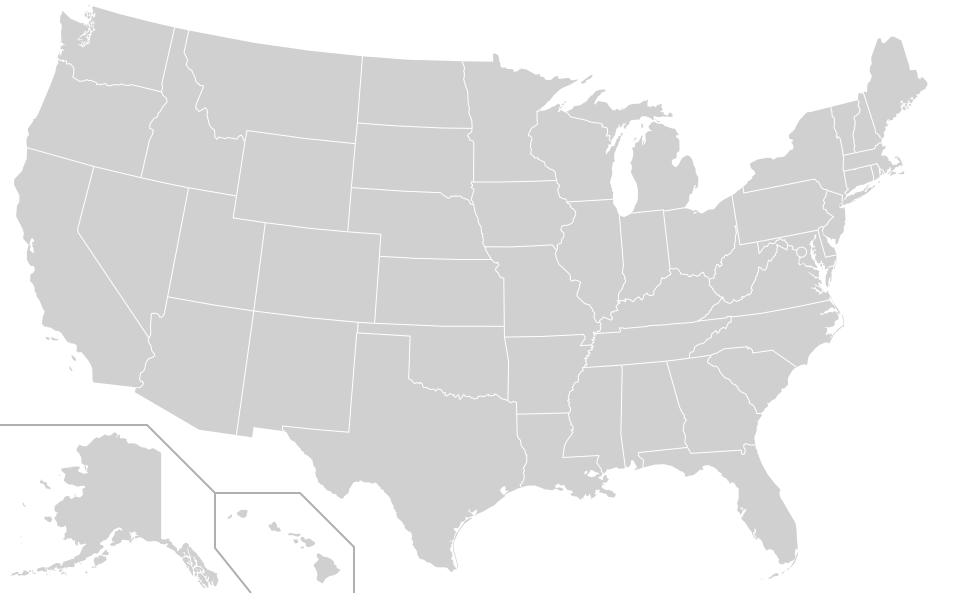
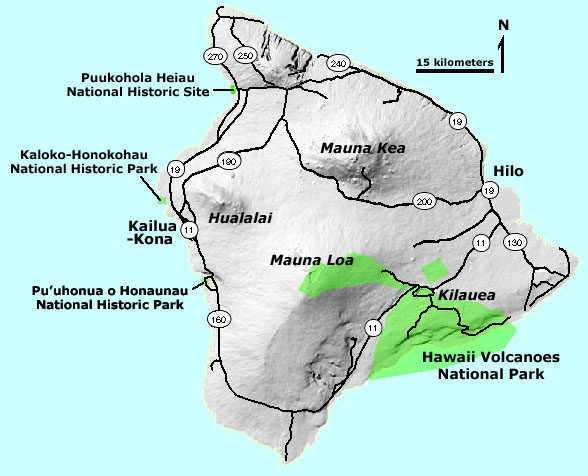
Hawaii coffee origins
1–9
Map markers 1–9
Hawaii Coffee Origins
USDA reports commercial coffee production on six Hawaiian islands. The entries below show each growing place and its label wording.
- 1Kona — Hawaii Island100% KONA COFFEE
- 2Kaʻū — Hawaii Island100% KAʻU COFFEE
- 3Puna — Hawaii Island100% HAWAII ISLAND COFFEE
- 4Hāmākua — Hawaii Island100% HAMAKUA COFFEE
- 5Maui100% MAUI COFFEE
- 6Kauaʻi100% KAUAI COFFEE
- 7Oʻahu, including Waialua100% OAHU COFFEE
- 8Molokaʻi100% MOLOKAI COFFEE
- 9Lānaʻi100% HAWAII COFFEE or 100% HAWAIIAN COFFEE
Coffee growing in California
10
Map marker 10
Coffee Growing in California
A 2020 state assessment identified Santa Barbara and San Diego counties as California’s largest specialty-coffee growing areas.
10
California coastal farms
Coffee grown in California
| Growing place | Wording to look for on the label | What the wording means |
|---|---|---|
| Kona — Hawaii Island | 100% KONA COFFEE | “Kona Coffee” means coffee grown in Kona on Hawaii Island. |
| Kaʻū — Hawaii Island | 100% KAʻU COFFEE | “Kaʻū Coffee” means coffee grown in Kaʻū on Hawaii Island. |
| Puna — Hawaii Island | 100% HAWAII ISLAND COFFEE | Coffee grown in Puna uses the label wording “Hawaii Island Coffee.” |
| Hāmākua — Hawaii Island | 100% HAMAKUA COFFEE | “Hāmākua Coffee” means coffee grown in Hāmākua on Hawaii Island. |
| Maui | 100% MAUI COFFEE | “Maui Coffee” means coffee grown on the island of Maui, not elsewhere in Maui County. |
| Kauaʻi | 100% KAUAI COFFEE | “Kauai Coffee” means coffee grown on Kauaʻi. |
| Oʻahu, including Waialua | 100% OAHU COFFEE | Coffee grown in Waialua uses the label wording “Oahu Coffee.” |
| Molokaʻi | 100% MOLOKAI COFFEE | “Molokai Coffee” means coffee grown on Molokaʻi. |
| Lānaʻi | 100% HAWAII COFFEE or 100% HAWAIIAN COFFEE | There is no separate “Lanai Coffee” wording, so “Hawaii Coffee” or “Hawaiian Coffee” applies. |
| California | Coffee grown in California | This wording identifies where the beans were grown; it is not a certification. |
Hawaii is the leading coffee-producing state. USDA estimated that 6,500 acres of coffee trees in Hawaii were mature enough to produce a crop in the 2025–2026 season. California’s industry is far smaller: a 2020 state assessment, using 2018 data, counted about 45 farms and identified Santa Barbara and San Diego counties as its largest growing areas.
100% Kona Versus a Kona Blend
On the label
“Kona” isn’t enough. Check the percentage.
Single origin
100%
KONA
COFFEE
All coffee from Kona
VS.
Legal minimum through June 30, 2027
10%
KONA
COFFEE BLEND
Contains 90% foreign-grown coffee
Not 100% U.S.-grown coffee
| On the label | Does this mean 100% U.S.-grown? |
What it means |
|---|---|---|
| 100% KONA COFFEE | Yes | All beans were grown in Kona; the coffee was processed in Hawaii. |
| 100% [HAWAII PLACE] COFFEEExamples: Hāmākua · Kaʻū · Hawaii Island · Maui · Kauaʻi · Molokaʻi · Oʻahu | Yes | All beans were grown in the Hawaii place named on the label; the coffee was processed in Hawaii. |
| 100% HAWAII COFFEEor 100% HAWAIIAN COFFEE | Yes | All beans were grown in Hawaii; the coffee was processed there too. |
| 100% CALIFORNIA-GROWN COFFEE | Yes | All beans were grown in California. Roasting and packing may happen elsewhere. |
| 10% KONA COFFEE BLENDContains: 90% foreign-grown coffee | No | This blend contains 10% Kona-grown coffee and 90% coffee grown abroad. Through June 30, 2027, a “Kona Coffee Blend” may contain as little as 10% Kona coffee. |
| 51% KONA COFFEE BLENDContains: 49% foreign-grown coffee | No | This blend contains 51% Kona-grown coffee and 49% coffee grown abroad. Beginning July 1, 2027, a “Kona Coffee Blend” must contain at least 51% Kona coffee. |
| ROASTED, GROUND OR PACKED IN USA | No | This wording identifies only U.S. processing. It does not say where the beans were grown. |
| USDA ORGANIC | No | Organic describes how the coffee was grown, not where it was grown. |
Hawaii law requires labels and ads for coffee sold or advertised in the state to list where the beans were grown and the percentage from each place. Through June 30, 2027, a blend may use “Kona” or another official Hawaii coffee-origin name when at least 10 percent of the coffee comes from there. On July 1, 2027, that minimum rises to 51 percent. The label must identify the origin of the rest or describe it as foreign-grown coffee.
Americana Gecko uses “100% American-grown” only when every bean was grown in the United States. The two blends above meet Hawaii’s minimum percentage rules but contain foreign-grown coffee, so neither is 100% American-grown.
“Organic” describes farming methods and certification. It does not say whether the coffee was grown in the United States or abroad.
What “100% Kona Coffee” Means
Look for this wording
100%
Kona Coffee
Every bean was grown in Kona.
Kona may appear in a trademark, business name or blend statement even when not every bean was grown there. Wording such as 100% Kona Coffee, 100% Hawaii Coffee, 100% Hawaiian Coffee, and 100% California-grown coffee says that every bean came from the named U.S. place.
What to check
Does the label say where every bean was grown? “Roasted in USA” does not.
What “Roasted in USA” Means
Imported beans remain foreign-grown after roasting in the United States.
Under the Federal Trade Commission standard, a plain “Made in USA” label means that a product is “all or virtually all” made in the United States. The FTC uses ground coffee as an example because the beans are the essential part of the product. Imported beans generally do not qualify for an unqualified “Made in USA” claim.
“Roasted in USA” can accurately describe coffee roasted here, but it does not say where the beans were grown.
Why American-Grown Coffee Often Costs More
What raises the price
01
Limited acreage
02
Hand picking
03
Labor costs
04
Processing and shipping
05
Pests and disease
06
Farm supplies
07
Limited supply and reputation
- U.S. coffee acreage is limited. Hawaii has only a few thousand acres in coffee production; California has a small network of specialty farms.
- Many farms harvest by hand. Workers at many small Hawaii farms pick ripe coffee cherries; some larger operations use mechanical harvesters.
- Labor is a major expense. In a University of Hawaii analysis of 2007 farm data, labor accounted for 39 percent of total coffee-farm costs.
- Processing and shipping add cost. Coffee cherries must be processed and milled. Selling Hawaii-grown coffee on the U.S. mainland also requires shipping it across the Pacific.
- Pests and disease damage crops. Coffee berry borer and coffee leaf rust can lower yield and quality while adding monitoring, treatment and labor costs.
- Farm supplies add cost. Fertilizer, crop protection, equipment and fuel are recurring expenses.
- Kona’s limited supply, production costs and established reputation can raise its retail price.
Price alone is not proof of origin. The label must state where the beans were grown.
Researchers Are Still Testing Coffee in Florida
Florida is not included on the map because researchers are still studying whether farmers can grow coffee there reliably and profitably.
University of Florida researchers are testing Coffea arabica and Coffea canephora in open fields and greenhouse-like high tunnels at sites from south-central Florida to North Florida. They are comparing varieties and farming methods with the goal of identifying the plants best suited to the state by 2029. So far, most interest has come from farms that sell directly to customers or offer tours and other visitor experiences.
The Americana Gecko Take
Beans grown outside the United States do not become American-grown when they are roasted, ground or packaged here. Look for a label that states where every bean was grown—for example, “100% Kona Coffee,” “100% Hawaiian Coffee” or “100% California-grown coffee.”
Sources
- Federal Trade Commission — Enforcement Policy Statement on U.S. Origin Claims and Complying with the Made in USA Standard
- Hawaii Revised Statutes §486-120.6 — Coffee Labeling Requirements, Hawaii Department of Agriculture — August 2024 Labeling Guidelines and Exact Identity-Statement Examples
- Hawaii Coffee Industry — Coffee-Growing Regions and Coffee Varieties
- USDA Agricultural Research Service — 2025 Annual Report and Hawaii Department of Agriculture & Biosecurity — Lānaʻi and Kauaʻi Coffee Production Context
- USDA National Agricultural Statistics Service — Noncitrus Fruits and Nuts 2025 Summary, May 2026
- USDA Agricultural Marketing Service — Labeling Requirements for the U.S. Organic Market
- University of Hawaii CTAHR — The Economics of Coffee Production in Hawaii and University of Hawaii Economic Research Organization — Economic Benefits and Costs of Biological Control
- California Department of Food and Agriculture — California-Grown Coffee, CDFA — Coffee Leaf Rust Pest Rating Proposal and University of California Cooperative Extension — Santa Barbara County Report
- University of Florida IFAS — Developing Coffee as a Viable Florida Crop
- Champagne Committee — The Champagne Region and European Commission — Champagne PDO Register
About this guide: This is a source-based label guide, not a product review. It covers coffee grown in the 50 states, so it does not include Puerto Rico. We did not taste any coffee, and the article contains no product, store or affiliate links.