In 1943, ranchers drove 500 cattle across the newly created Jackson Hole National Monument. They wanted a confrontation with the federal government. The National Park Service let the cattle pass.
The dispute was about who would control the valley, what would happen to its ranches and how the county would collect taxes. The protected landscape visitors know today emerged from years of disagreement.
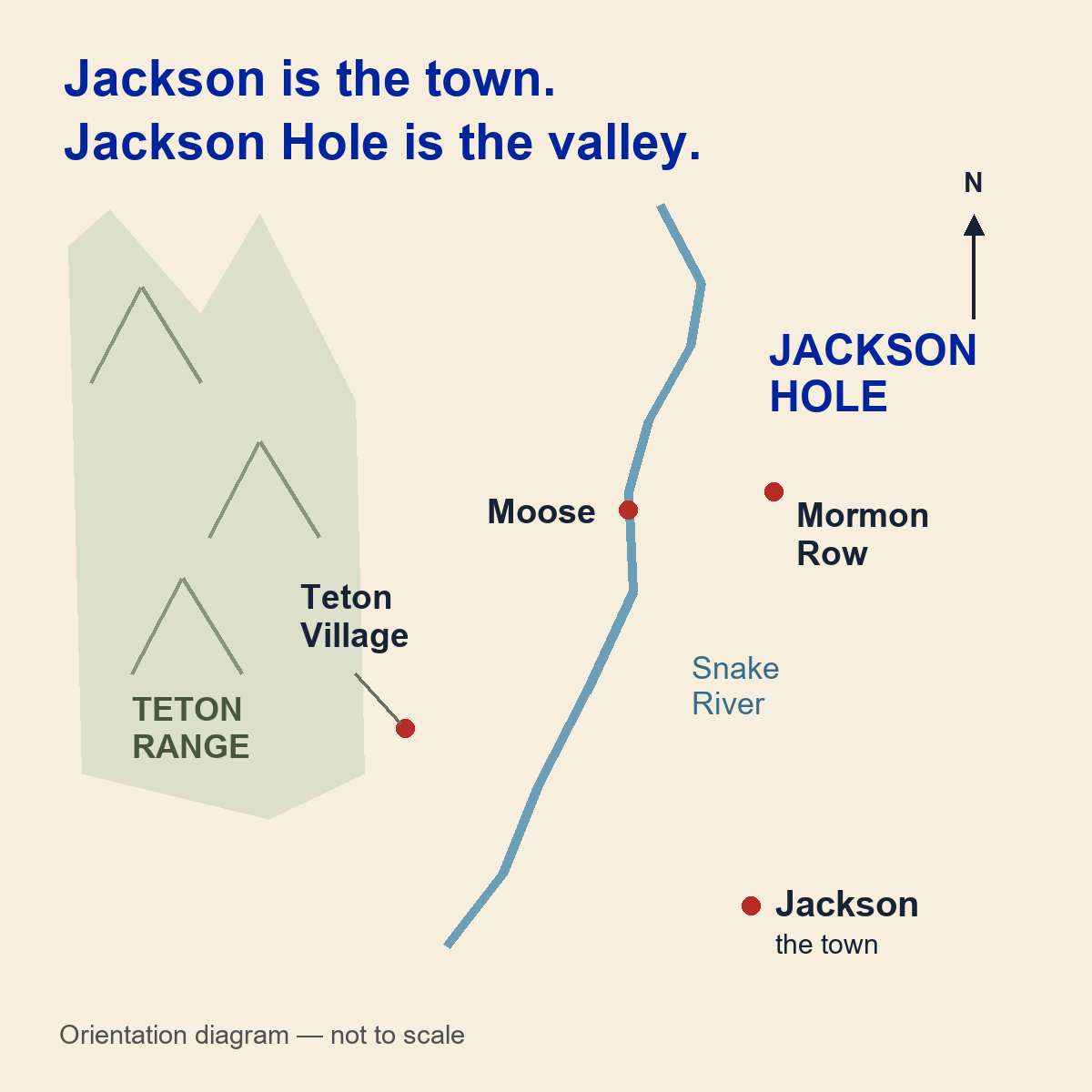
Jackson is the town. Jackson Hole is the valley.
Jackson Hole is the larger mountain valley in northwestern Wyoming, with the Teton Range along its western side and the Snake River running through it. Teton Village, where Jackson Hole Mountain Resort is based, is a separate community northwest of Jackson. The National Park Service’s regional map makes the distinction clear.
A homeland before it had an English name
の earliest archaeological evidence of people in the area dates back at least 11,000 years. Long before Euro-American trappers arrived, Indigenous peoples hunted, gathered plants and collected stone here. Shoshone, Bannock, Crow, Blackfeet and Nez Perce peoples were among those with ties to the region.
These are living connections. Grand Teton National Park identifies 24 associated tribes, including the Eastern Shoshone, Shoshone-Bannock and Northern Arapaho. The park describes historical, cultural and spiritual relationships that continue today.
The later settlement story also involves displacement. The park notes that the present locations of many tribal governments reflect forced removal from traditional lands. The 1868 Fort Bridger treaty established the Wind River reservation for the Eastern Shoshone; reservation boundaries did not erase their wider ties to the region.
Beaver trapping brought Euro-American traders into the valley in the early 1800s. It took its English name from fur trader David Edward Jackson. A “hole” was a mountain valley in the trappers’ vocabulary.
The barns were built for work
Euro-American homesteaders arrived in the 1880s, facing rocky soils, harsh weather and difficult access. Growing crops and raising cattle took considerable labor.
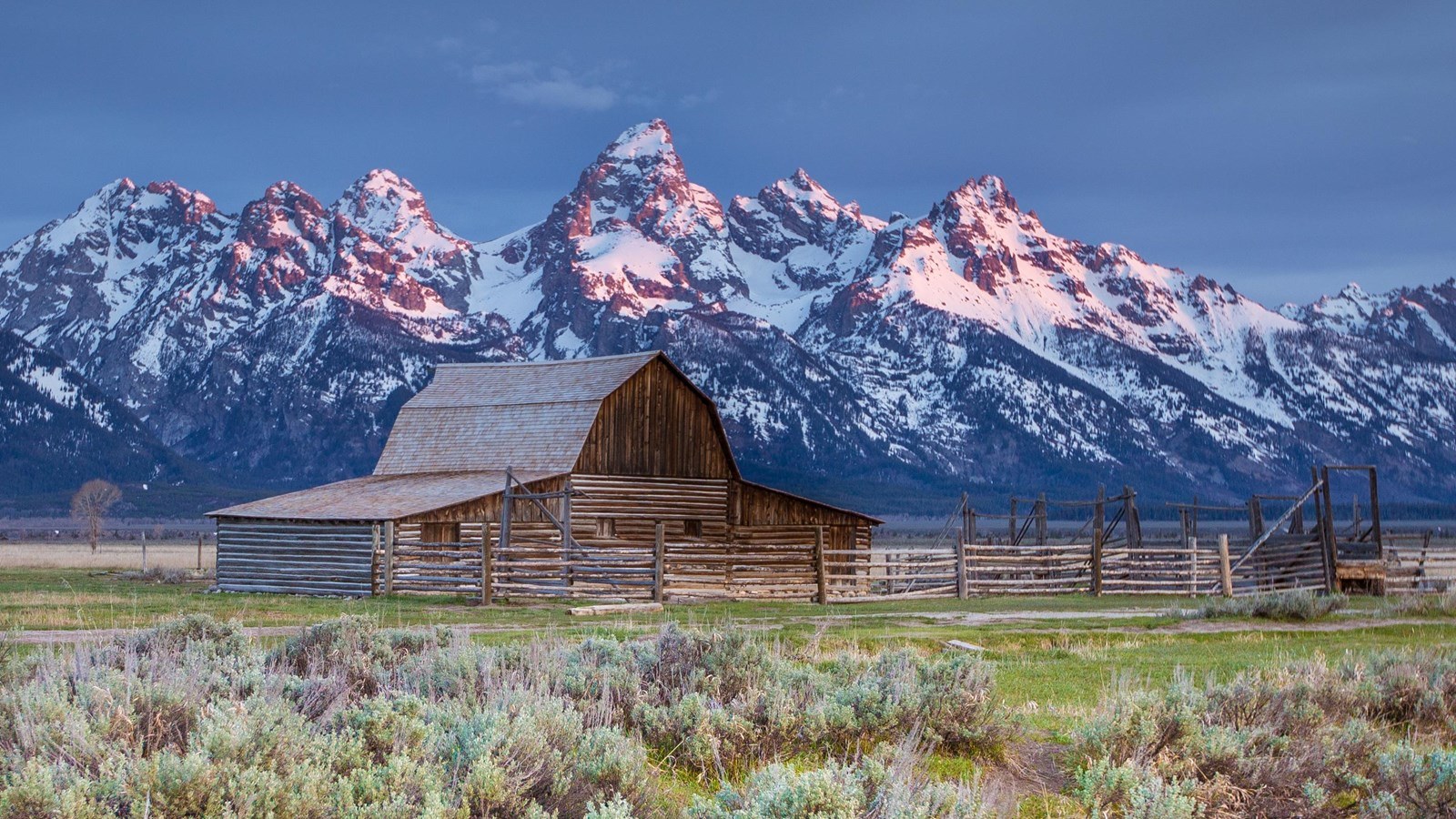
At Mormon Row, settlers arriving from Idaho in the 1890s built a community called Grovont. Twenty-seven homesteads clustered together, sharing labor rather than facing the valley in isolation. Families dug irrigation ditches and built levees and dikes to bring water to their fields.
The two well-known Moulton barns belonged to different homesteads: John Moulton’s and Thomas Alma Moulton’s. They were parts of farms, with houses, animals, hayfields and water systems.
Tourists were arriving well before the modern ski resort. A dude ranch took in paying guests who wanted horses, outdoor recreation and a taste of ranch life. Struthers Burt and Horace Carncross opened the Bar BC in 1912. Its guests included writers and artists; some brought typewriters. The entertainment extended to original plays and literary discussions.
Paying guests gave ranchers another source of income. Open land and a view of the mountains now had value as part of a vacation.

The women who ran Jackson
Jackson incorporated in 1914. Six years later, voters elected Mayor Grace Miller and an all-woman town council. Pearl Williams served as town marshal.
The work was practical. In a 2020 interview based on the council’s records, museum director Morgan Jaouen described the administration collecting overdue taxes, improving roads and extending electricity. The council also made littering a misdemeanor.
The national park did not arrive all at once
Some local residents wanted protection from development. Others feared federal control and the loss of taxable land. John D. Rockefeller Jr. entered that divided debate, using the Snake River Land Company, established in 1927, to buy land for eventual preservation. His involvement was initially kept out of public view.
の original Grand Teton National Park, created in 1929, protected the mountains and lakes at their base. Much of the valley remained outside it. Roosevelt’s 1943 national monument expanded federal protection and provoked the cattle-drive protest.
Rockefeller’s land was formally donated to the government in 1949. In 1950, President Harry Truman signed the legislation combining the original park and monument into an enlarged Grand Teton National Park.
Elk, bison and the land between seasons
Each autumn, deepening snow pushes elk from their higher summer ranges toward lower ground in Jackson Hole. Many spend winter on the National Elk Refuge, just north of Jackson. In spring, they follow the retreating snow toward summer ranges in Grand Teton and the surrounding national forest.
Settlement disrupted migration routes and winter habitat. Reduced feeding grounds and severe winters left elk starving. Residents campaigned for protection, and Congress established the refuge in 1912. The same valley that offered land for homes and farms was also the herd’s winter refuge.
Moose browse willows along the Snake River; bison graze river meadows and sagebrush flats. Grand Teton also supports black and grizzly bears. Wolves dispersed into the area after their reintroduction to Yellowstone in 1995–96. In 1999, a pack produced pups in Grand Teton—the park’s first recorded litter in more than 70 years.
Pronghorn spend summers in the valley’s sagebrush country before migrating southeast through the Gros Ventre drainage toward winter range beyond Pinedale. Fences obstruct that journey because pronghorn generally crawl underneath them rather than jump. Keeping these routes connected requires wildlife crossings, suitable fencing and cooperation across public and private land. Protecting summer habitat alone cannot carry an animal through winter.
A ski hill powered by a tractor
Skiing developed alongside the conservation fight. At Snow King, the hill rising above Jackson, a cable tow opened in 1939. According to a Teton County historic-preservation report, Neil Rafferty used secondhand cable from an oil-drilling company in Casper and an old Ford tractor to power the lift. Skiers attached themselves to the moving cable with ropes and clamps.
Snow King’s first chairlift opened in January 1947, using an old gold-ore tram brought from Salida, Colorado. The town’s early lift system was assembled from equipment that had already done other jobs.
A larger resort followed at Teton Village. Jackson Hole Mountain Resort’s own history dates its first chairlift to December 1965 and its original aerial tram to 1966. The two ski areas are distinct: Snow King is in Jackson; the resort and its tram are northwest of town.
Why central bankers come to Jackson Hole
Jackson Hole’s central-banking gathering began in Missouri. The Federal Reserve Bank of Kansas City held its first economic symposium in 1978, on agricultural trade. In 1982, the event moved to Jackson Lake Lodge in Grand Teton National Park. That year’s subject was monetary policy, and Federal Reserve chair Paul Volcker attended.
The fishing was part of the appeal. According to the bank’s published history, research director Tom Davis wanted a location with trout fishing to help attract Volcker, an enthusiastic fly-fisher. Wyoming also lay within the Kansas City Fed’s district.
The annual symposium brings together central bankers, economists and other invited participants to present research and debate economic questions. The bank publishes papers and proceedings for readers outside the meeting。 その 2026 gathering examined financial innovation, including digital payments.
It is not the meeting where the Fed votes to change its benchmark interest-rate target. That happens at separate Federal Open Market Committee meetings, normally held eight times a year in Washington. The target influences borrowing costs and the interest savers earn. Jackson Hole provides a forum to discuss policy; the committee makes the decisions.
What prosperity should protect
The Kansas City Fed’s symposium gives Jackson Hole a place in global economic debate. We welcome that role. We also think the valley offers a concrete test of prosperity: whether a country can keep public land accessible while giving wildlife room to survive.
That means protecting elk winter range and pronghorn migration routes, including the stretches that cross private land. Parks, ranches and towns share the same valley. Economic success should help pay for wildlife crossings, habitat protection and public access that allow them to coexist.


