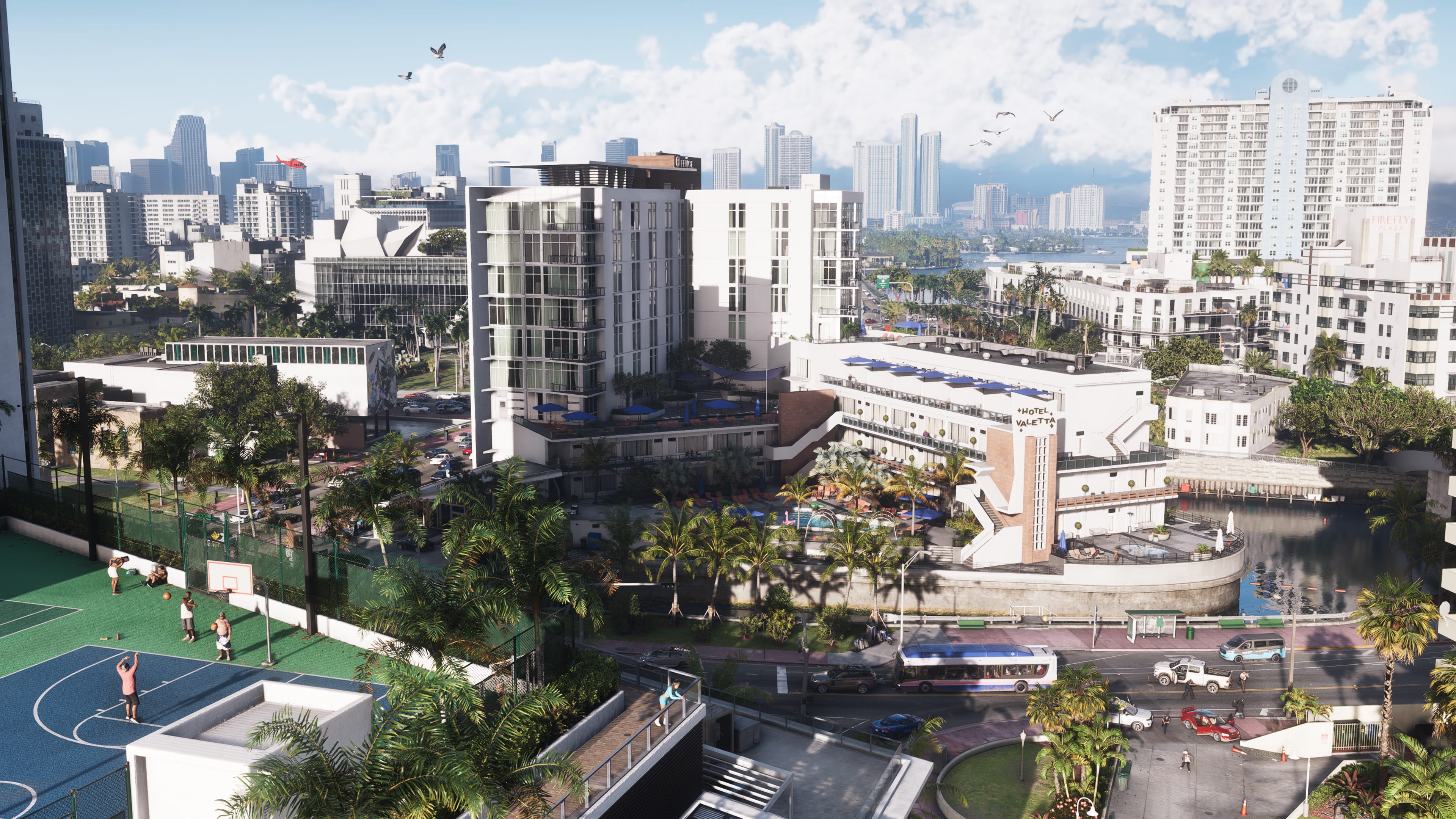
Vice City looks good enough to ruin your plans. There is the water, the skyline, a road out of town. Then a helicopter appears, and the trip becomes a Grand Theft Auto story.
For decades, the series has sold a peculiar American holiday: take the car, turn up the radio and see what happens. Its cities can be cruel, ridiculous and corrupt. They are also places the game expects you to want to explore. The joke depends on the attraction.
That is a cultural achievement worth taking seriously. America supplies enough recognizable life for a game to exaggerate it, export it and still leave audiences wanting another visit. The strongest patriotic argument here begins with a complication: the original Grand Theft Auto was made in Scotland.
The view came from across the Atlantic

DMA Design developed the first Grand Theft Auto, released in 1997 by BMG Interactive. That Scottish beginning matters. This was not simply an American company congratulating its home country. People abroad found American cities, crime stories and street life compelling enough to build a game around them.
The distinction is between making the work and supplying its cultural vocabulary. An American city can be recognizable to someone who has never walked its streets. Films, records and television have already introduced the cars, the voices, the storefronts and the police siren. GTA turns that familiarity into a place a player can move through.
Recognizable does not mean accurate. A crime game has reasons to make the city more volatile than an ordinary Tuesday. But familiarity gives the exaggeration somewhere to start. The audience can recognize a joke about America because so much American culture has already crossed the border.
Two hundred and thirty million copies is reach, not a referendum
Dans son filing for the quarter ended September 30, 2026, Take-Two said Grand Theft Auto V had sold in more than 230 million units worldwide. The series as a whole had passed 475 million. “Sold in” is the publisher’s sales measure; those figures are not counts of unique players.
They do establish enormous commercial reach. They do not establish why each customer bought the game, whether the customer admires the United States or whether a particular mission changed anybody’s politics. A sales report cannot answer those questions.
The narrower conclusion is impressive enough: an entertainment series built around fictional American places has found a vast international market. It does not need to hide the country behind an anonymous futuristic city. America is part of the offer.
That is a more interesting kind of influence than demanding praise. A player can laugh at a fictional tycoon, enjoy an American song and spend an evening driving through an American-inspired city without resolving the contradiction. The culture is doing several things at once.
The motel belongs in the picture
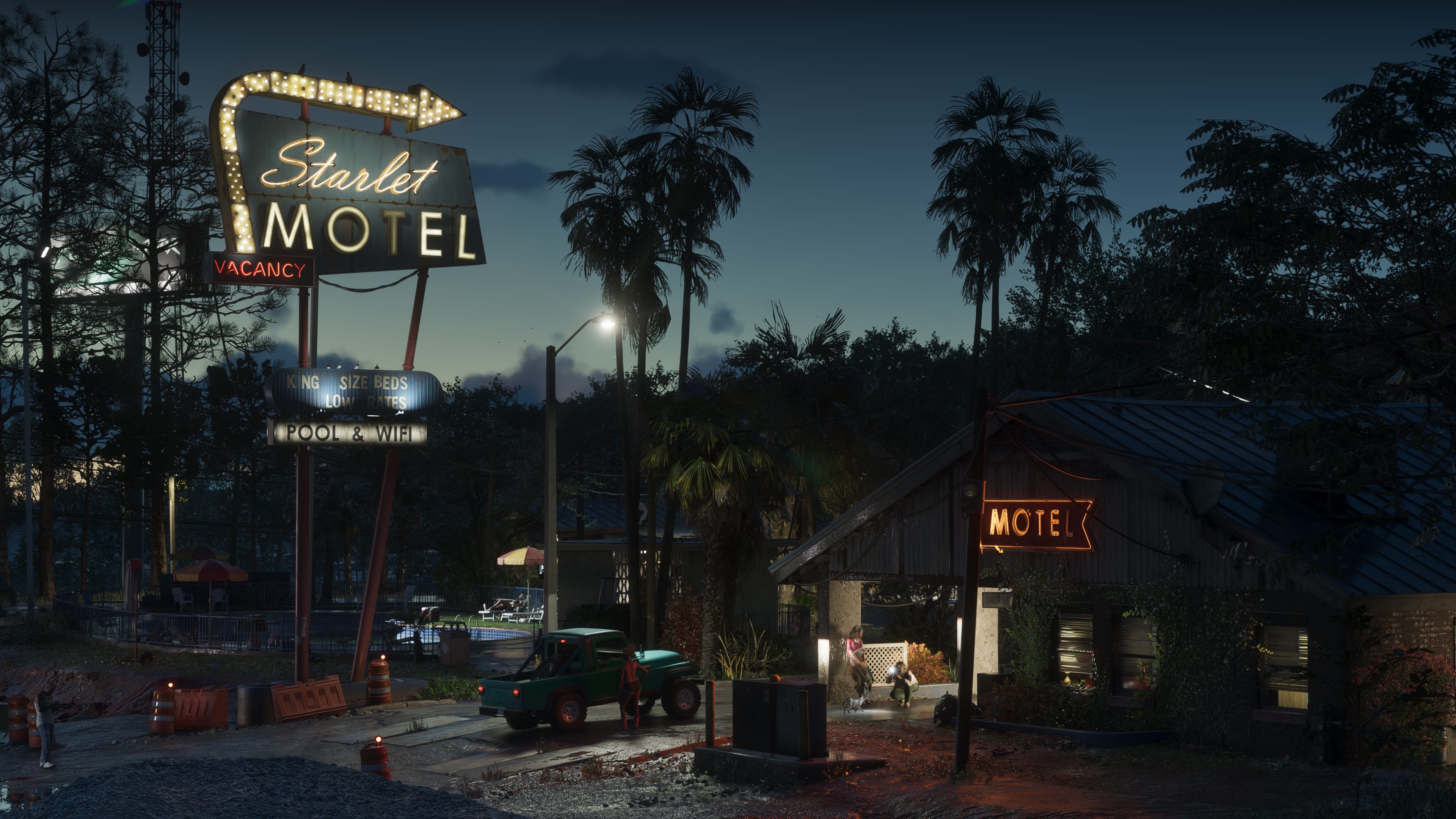
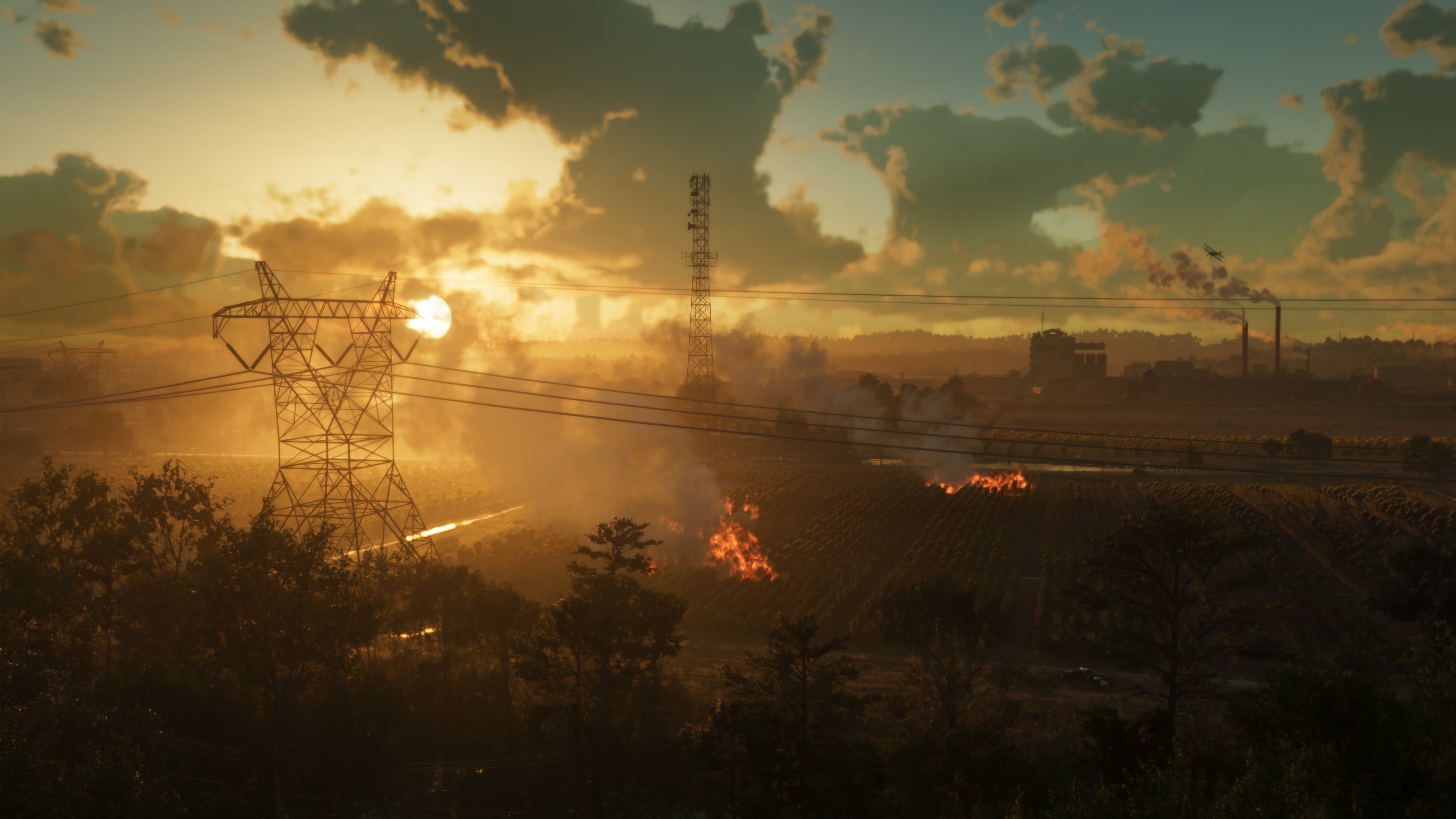
GTA VI’s published images show more than beach towers and sports cars. Port Gellhorn has a motel sign. Ambrosia has utility lines and industry. Grassrivers has buildings lifted above the water. The roads carry people beyond the glamorous part of the postcard. Rockstar’s regional previews make those differences part of Leonida’s identity.
The ordinary details give the grand ones company. A hotel lobby is more convincing when there is a service road somewhere behind it. A fast car needs a gas station. A city needs neighborhoods whose chief purpose is to get people through the day. These are useful ingredients for a game, and they are also evidence of how much American life is available to look at.
A generic celebration would keep the skyline and lose the motel. That would miss much of the appeal. American popular culture has made room for the grand entrance, the bad decision, the roadside stop and the long drive home. The distance between those experiences gives storytellers room to work.
The country changes when you turn the dial
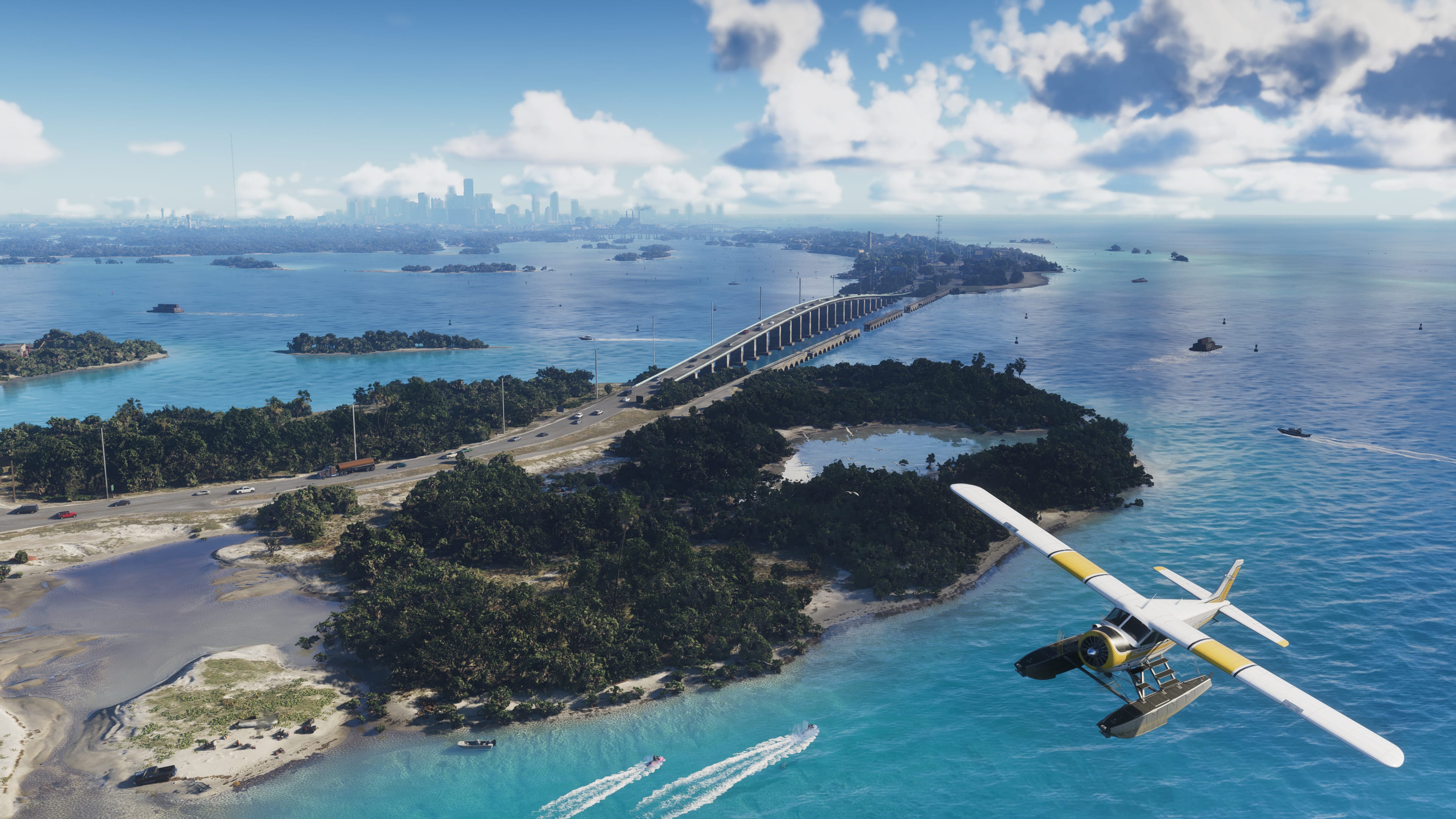
The radio gives that variety a voice. Rockstar’s GTA VI music page presents Back Country and Dirty South Classics alongside its separate soundtrack album and score. Different musical traditions can occupy the same drive. The announced score is by Justice, a French duo; this is an international production, not an all-American credits list.
Country and Southern rap do not need to sound alike to belong in the same regional story. Nor should one be treated as an amusing interruption of the other. The change of station can make the setting feel larger: different performers, different histories, different ideas about a good night.
The Library of Congress put a broader version of the argument in its May–June 2026 magazine, describing the international reach of American popular culture through music, film and other forms. Its essay is not a survey of GTA players. It is useful context for a game that brings those forms together and lets the player choose what to hear.
An insult can travel with the invitation
GTA is a poor recruiting poster for good behavior. That does not make its cultural appeal a mystery. A work can make a place attractive while attacking its vanity, excess or failures. Satire needs recognizable subjects; the larger the public mythology, the more material there is to turn against it.
We should resist counting every insult as a secret compliment. Some criticism is meant as criticism. American pride does not require pretending otherwise. It is stronger when it can distinguish a joke, a serious charge and a scene that simply looks wonderful.
The freedom to make a country look bad is worth more than a spotless fictional image of it. That is our judgment, not a finding buried in the sales figures. A culture confident enough to tolerate irreverence gives its artists more room than one that requires an approved national portrait.
Let the country be interesting
America should want to be a place that people make things about. That requires more than protecting famous logos. It requires preserving the freedoms and the variety that give a writer, musician or game designer something to use: distinctive cities, difficult histories, ambitious people and the right to make a joke.
GTA’s foreign beginnings strengthen this argument. American cultural influence is not limited to work made by Americans, and admiration need not arrive as flattery. A Scottish-born series can mock this country and still demonstrate how much of the world knows its sounds, recognizes its streets and wants to see what is around the next corner.
GTA VI images © Rockstar Games.


