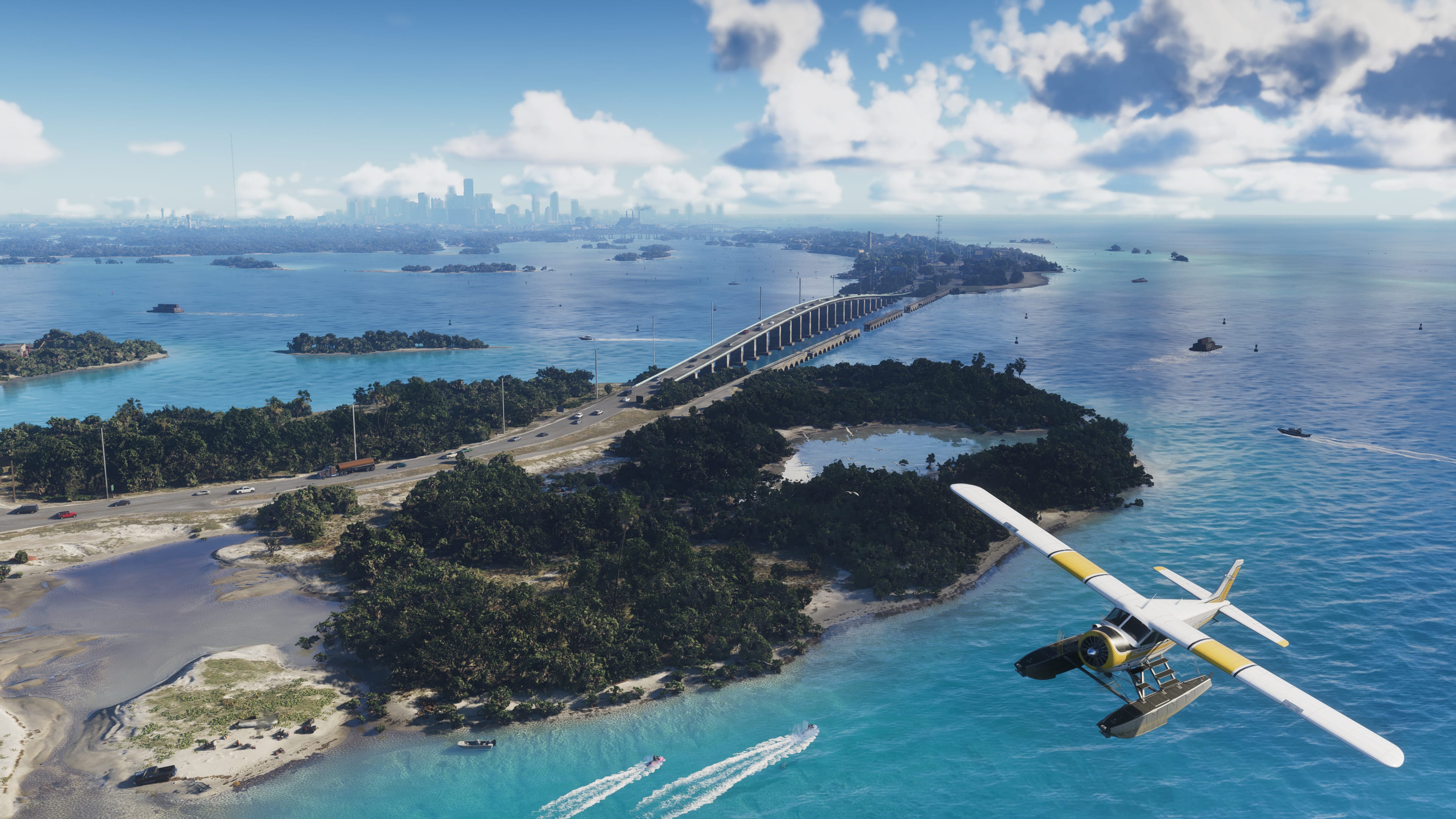
Start with the bridge. In Rockstar’s Leonida Keys screenshot, a thin road runs across blue water toward a chain of low islands. A floatplane hangs above the shoreline. There is more water than land, and the road looks like a bargain struck between the two.
That is a better introduction to the Florida behind Grand Theft Auto VI than another montage of nightclub lights. The state’s peculiar strength is the distance between its worlds: a marina and a machine shop, a beachfront hotel and an inland mill, a crowded city and water stretching toward the horizon. Rockstar’s official images offer all of those kinds of scenes.
Leonida is fiction. The comparisons here explain the real American places and histories that make its pictures legible; they do not establish a street-for-street map. Florida deserves the closer look. Its people built more than a backdrop for somebody else’s getaway.
Vice City starts with Miami, but Miami keeps going
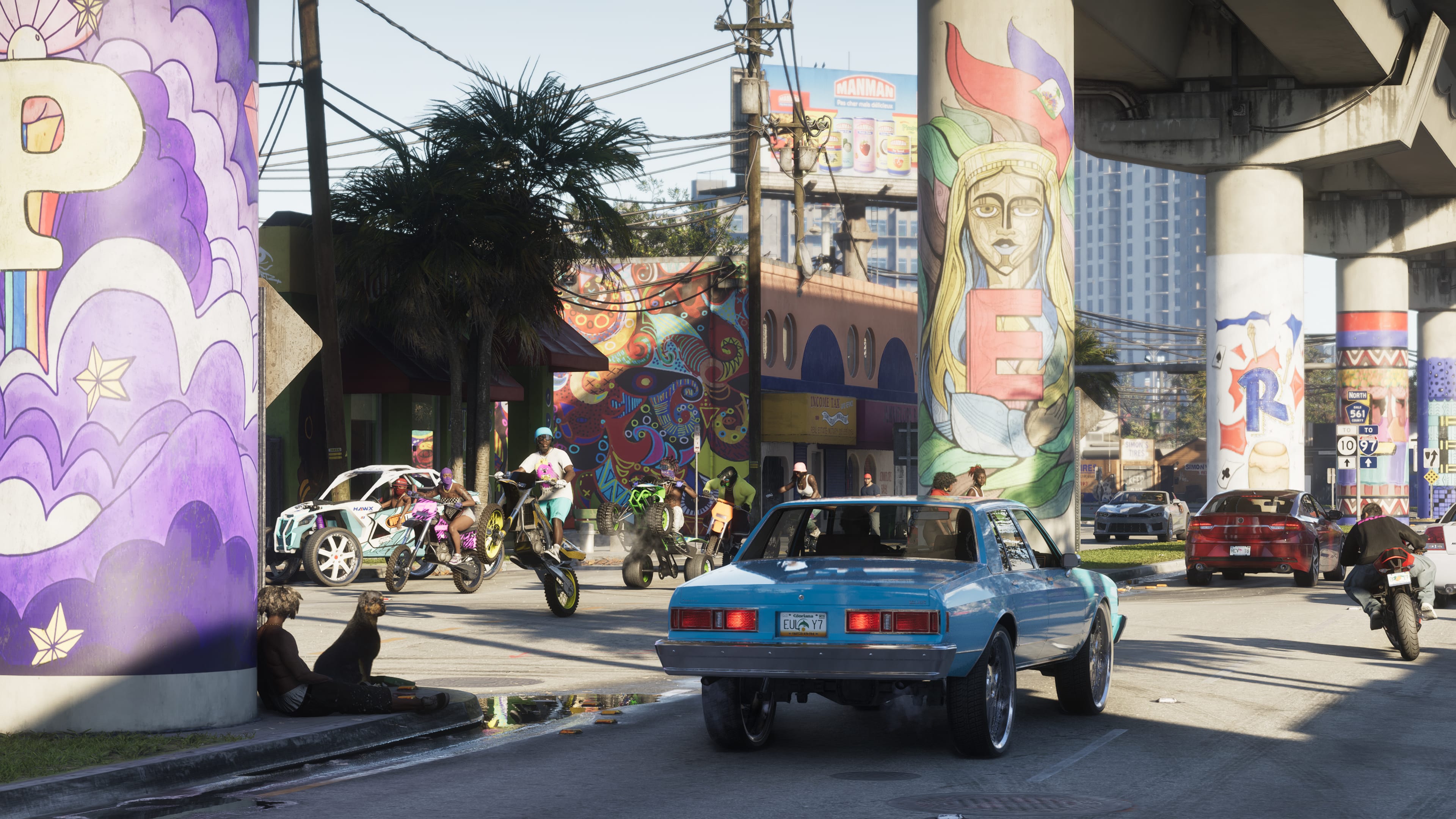
The easy comparison is the waterfront: towers behind marinas, beach crowds and low hotel fronts lit pink after dark. But look at the official image of a painted elevated roadway passing through a neighborhood. Utility wires, storefronts and ordinary traffic do as much to establish a city as its skyline. Vice City’s visual interest survives away from the sand. Rockstar Games: official screenshots
Real Miami’s history also refuses the postcard crop. Freedom Tower served as the Cuban Assistance Center from 1962 through 1974. Refugees fleeing Castro’s regime received help with medical care, food and resettlement there. The building makes the connection between a city and the search for liberty concrete: people needed somewhere to begin again. NPS: Freedom Tower
Black Americans and Black Caribbean migrants helped build Miami while segregation restricted where they could live. Overtown became a center of business, music and community life; expressway construction later tore through it. The University of Miami’s oral-history project preserves that history. These are real communities with their own achievements and losses, not explanations for a fictional criminal cast. A city can be funny on screen without its actual residents becoming the punch line. University of Miami: Overtown Community
The Keys are an edge, not an empty playground
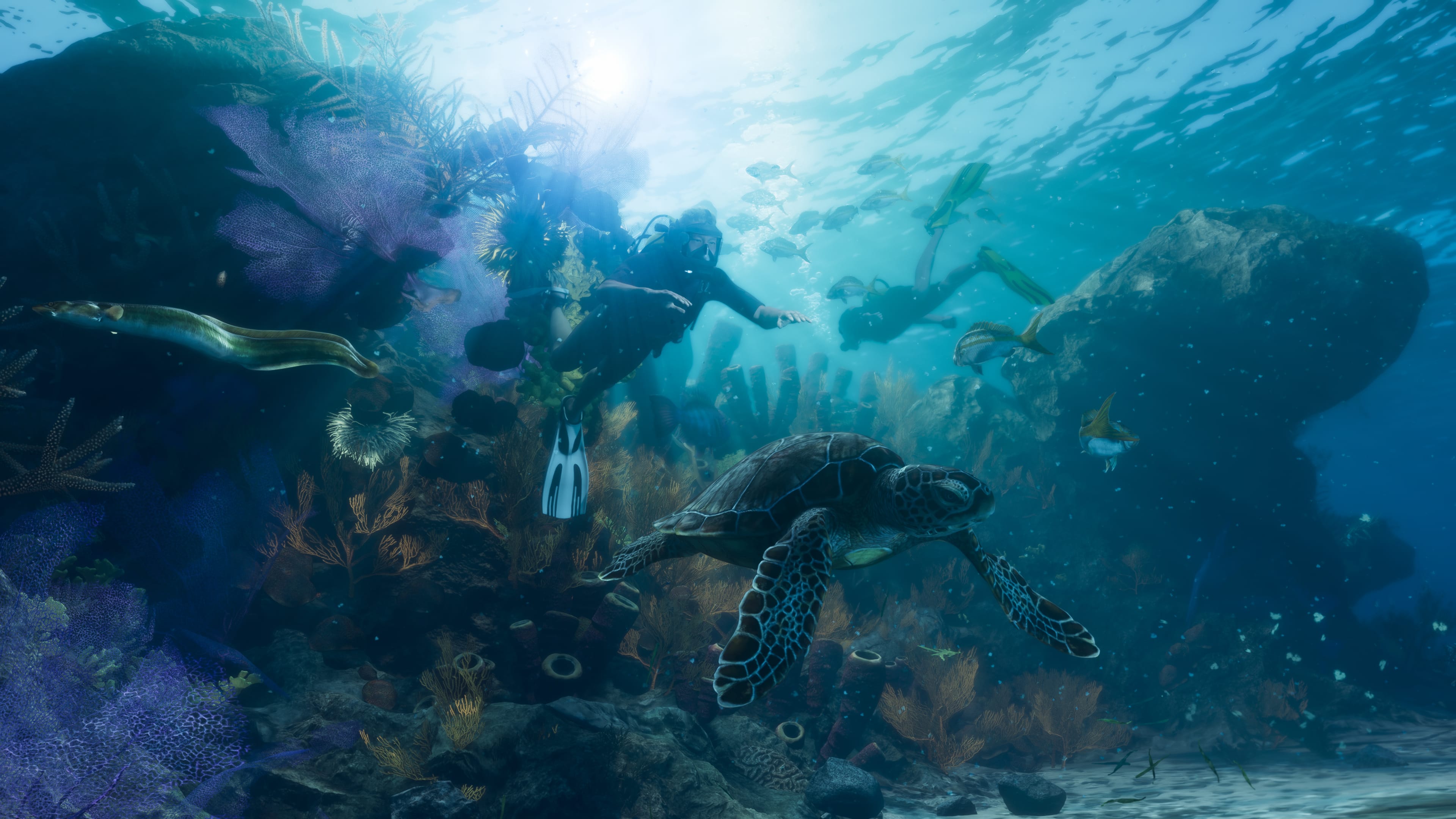
The Leonida Keys pictures put fishing boats, a roadside gathering and an underwater scene within the same regional album. That combination makes sense beside the Florida Keys: travel, recreation and marine life occupy the same narrow margin. An island road is impressive partly because the water never lets you forget how little room there is. Rockstar Games: official screenshots
NOAA describes the real Keys’ mangroves, seagrass meadows and reefs as connected habitats. Mangrove roots shelter young fish and invertebrates; those tangled shorelines belong in the story as much as open blue water. The apparently untidy edge is doing useful work. A trimmed resort photograph can miss the very thing that helps make a coast productive. NOAA: Mangrove Forest
Rockstar’s underwater screenshot invites a slower kind of looking than its chase scenes. A diver appears among fish, coral and a sea turtle.
A river can be wider than it looks

Grassrivers offers another recognizable Florida comparison: airboats, flooded grass, dense vegetation and raised buildings beside the water. The temptation is to call the whole thing a swamp and move on. The real Everglades reward a more exact description. Rockstar Games: official screenshots
A slough is a low area that carries water through the wetlands. The National Park Service describes the current in the Everglades’ freshwater sloughs as moving about 100 feet a day. Shark River Slough and Taylor Slough empty into Florida Bay. Water is moving even when the view appears still. That is part of what makes this place so unusual: the important action can be too slow for a chase. NPS: Freshwater Slough NPS: Everglades habitats
The park also contains pine rocklands, hardwood hammocks, mangroves and marine waters. A dry patch of higher ground can hold a different community of plants from the marsh beside it. No single muddy channel stands in for the whole system. The slow water connects places that look very different when you are standing in them. NPS: Everglades habitats
A house above the bay

Raised waterfront buildings offer a separate, concrete comparison. At Stiltsville in Biscayne Bay, houses stand above shallow water. The National Park Service dates the community’s beginnings to the 1930s and describes repeated losses to storms and fire. Its structures require a permit for public access. A house above the bay can look wonderfully free; reaching it and keeping it standing are practical matters. NPS: Stiltsville
The wetland has never been empty
The Everglades are also a homeland. Calusa communities occupied the southwest coast; Tequesta communities lived along South Florida’s east coast. Seminole and Miccosukee history belongs to the region’s later centuries and to its present. Lumping every Native history into one vanished population gets both the people and the place wrong.
The 2024 agreement between the Miccosukee Tribe of Indians of Florida and Everglades National Park is especially useful reading. It recounts nineteenth-century military removal and village destruction, followed by family-camp evictions during the park’s creation. It also records the Tribe’s continuing relationship with these lands. Co-stewardship is a present responsibility, not a decorative historical footnote. NPS: Native People NPS–Miccosukee co-stewardship agreement
There is a working Florida inland
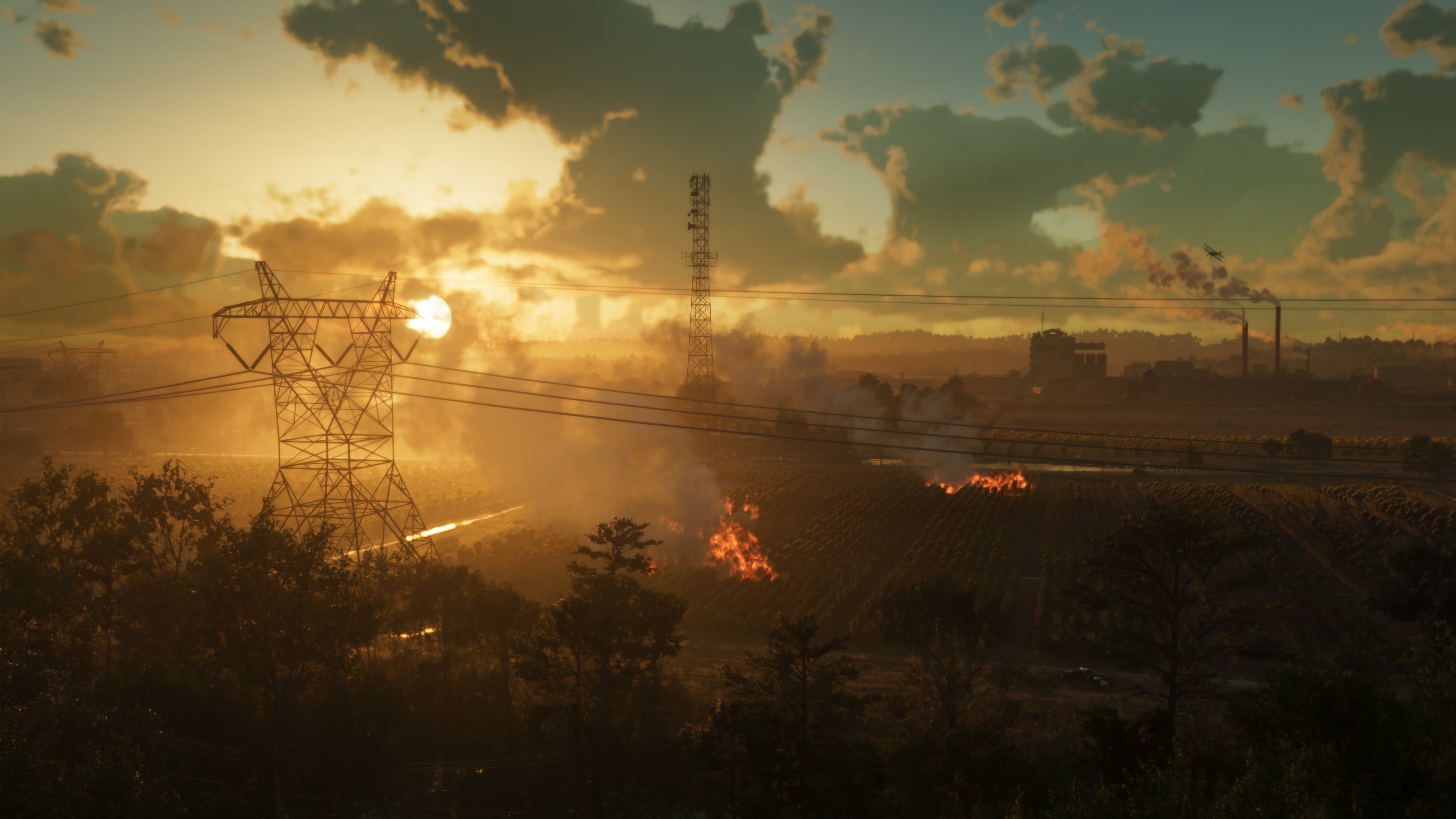
Ambrosia’s official images change the color of the story. An industrial horizon sits below a storm; another view sets utility towers and plant structures against an orange sky. Port Gellhorn adds a motel sign beside the road. In these places, arriving in Florida does not mean arriving at the beach. Rockstar Games: official screenshots
Clewiston is one useful real comparison. Its National Register documentation ties the town’s development to sugar production, drainage, transport and company investment. A mill opened there in 1929; the history of the Clewiston Inn follows the same industrial economy. Agriculture did not stop at the field’s edge. It needed roads, machinery, places to sleep and a town around them. Clewiston Inn National Register nomination
The mill and the roadside motel belong in the same Florida story as the marina. One makes something; the other offers a bed to someone passing through. Towns grow around those needs. Leaving them out would produce a prettier postcard and a poorer account of the state, where the day can be organized around making and moving things.
Mount Kalaga is where the map gives itself away
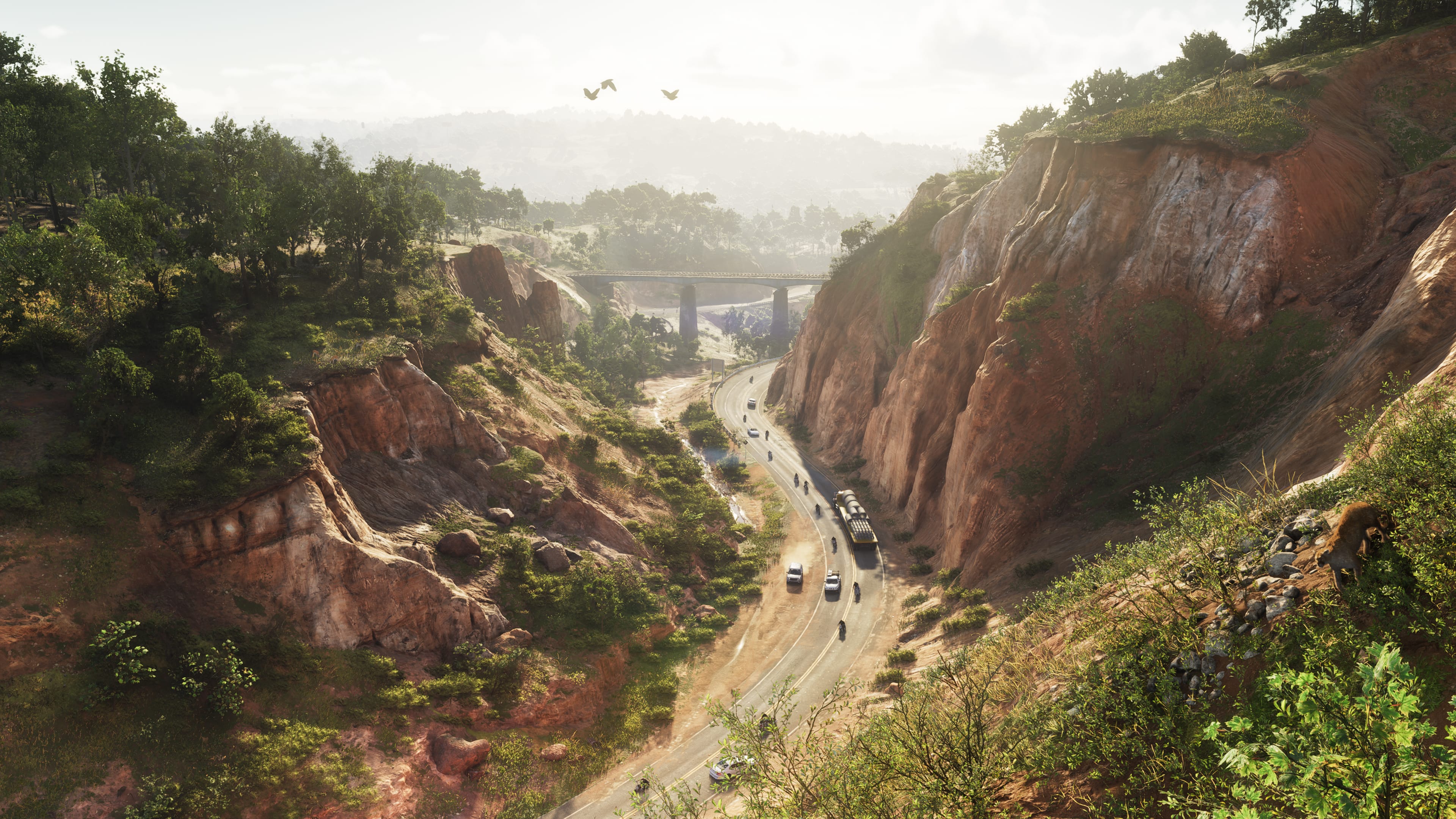
Then comes Mount Kalaga. Rockstar’s named national-park images include wooded slopes, rock cuts, a river and an industrial ruin. They are a useful reminder that a convincing fictional region can combine familiar details into geography Florida does not actually possess. Rockstar Games: official screenshots
Florida has hills. It does not have a mountain range hiding behind Miami. The Florida Geological Survey puts the state’s highest point, Britton Hill in the Panhandle, at 345 feet above sea level. Mount Kalaga’s name and imagery cannot be used as evidence for a real South Florida mountain destination, nor do these pictures establish a particular out-of-state model. Florida Geological Survey: July 2025 bulletin
The real places come with responsibilities that fiction can skip. Everglades guidance tells visitors to plan around seasonal conditions, prepare for heat and insects, and leave wildlife alone. Check current park notices and access rules before setting out. A screenshot is an invitation to pay attention, not a trail map. NPS: Everglades safety
The best reason to follow GTA VI’s pictures back to Florida is that the real state keeps exceeding the caricature. Its islands support living marine systems. Its wetlands carry water and hold homelands. Its cities were built by people whose work and pursuit of freedom still deserve to be named.
Leonida can supply the getaway. Florida supplies the reasons to look longer.
GTA VI images © Rockstar Games. Stiltsville photograph: NPS/Matt Johnson.


